
Hair Restoration vs. Hair Replacement: What's the Difference and Which Is Right for You?

7 August 2026

These two terms are often used interchangeably, but they describe very different approaches to addressing hair loss. For residents across Troy, MI, and the surrounding Oakland County area, understanding the distinction can save time, set realistic expectations, and help match the right solution to your situation.


What Is Hair Restoration?


Hair restoration refers to surgical procedures that use your own living follicles to permanently regrow hair in thinning or balding areas. The most common methods are Follicular Unit Extraction (FUE) and Follicular Unit Transplantation (FUT). With FUE, individual follicles are harvested from the back or sides of the scalp and transplanted to areas of loss. Results grow naturally and can be cut and styled like your original hair.


For those seeking a long-term, low-maintenance solution, surgical hair restoration may be worth exploring with a qualified physician. Because the transplanted follicles are your own, they continue to grow for life when placed correctly. Recovery typically spans a few days of downtime, with final results visible within nine to twelve months.


What Is Hair Replacement?


Hair replacement is a non-surgical approach. It covers thinning or bald areas using an external hair system, such as a custom hairpiece or prosthetic, made from human or synthetic hair. These systems can be matched to your natural color, texture, and density, delivering immediate visual results.


Hair replacement requires no surgery or recovery time, but does require ongoing maintenance and periodic replacement of the system. It may suit those who are not surgical candidates, prefer to avoid a procedure, or need immediate coverage while weighing longer-term options.


Quick Comparison: Restoration vs. Replacement

  • Restoration uses your own follicles and offers permanent growth.
  • Hair replacement uses an external system and delivers instant results.
  • Restoration requires a recovery period; replacement does not.
  • Replacement systems require regular upkeep and eventual replacement.
  • Candidacy for surgery depends on donor hair availability and overall health.


Who Is a Good Candidate for Surgical Hair Restoration?

Good candidates are generally adults with stable hair loss patterns, sufficient donor hair, and realistic expectations. People with very limited donor supply or certain medical conditions may not qualify. A consultation with a trained specialist can determine candidacy accurately.


Is Hair Replacement a Permanent Solution?

No. Hair replacement systems provide coverage by attaching an external hairpiece to the scalp or existing hair. While modern systems can look highly natural, they require maintenance appointments and eventual replacement as materials wear over time.


Ready to Explore Your Options Serving Troy, MI?


The right choice depends on your degree of hair loss, your health, your lifestyle, and your long-term goals. A complimentary consultation is the most reliable first step. Learn more about FUE hair restoration to understand what the surgical process involves, or visit the Troy, MI, services page for details on how the practice serves the area.


Drs. Berry, Luther & Aronovitz have been helping patients address hair loss since 1974, serving men and women of all ages across Southeast Michigan. Call (586) 612-0757 to request your free, no-obligation consultation today.
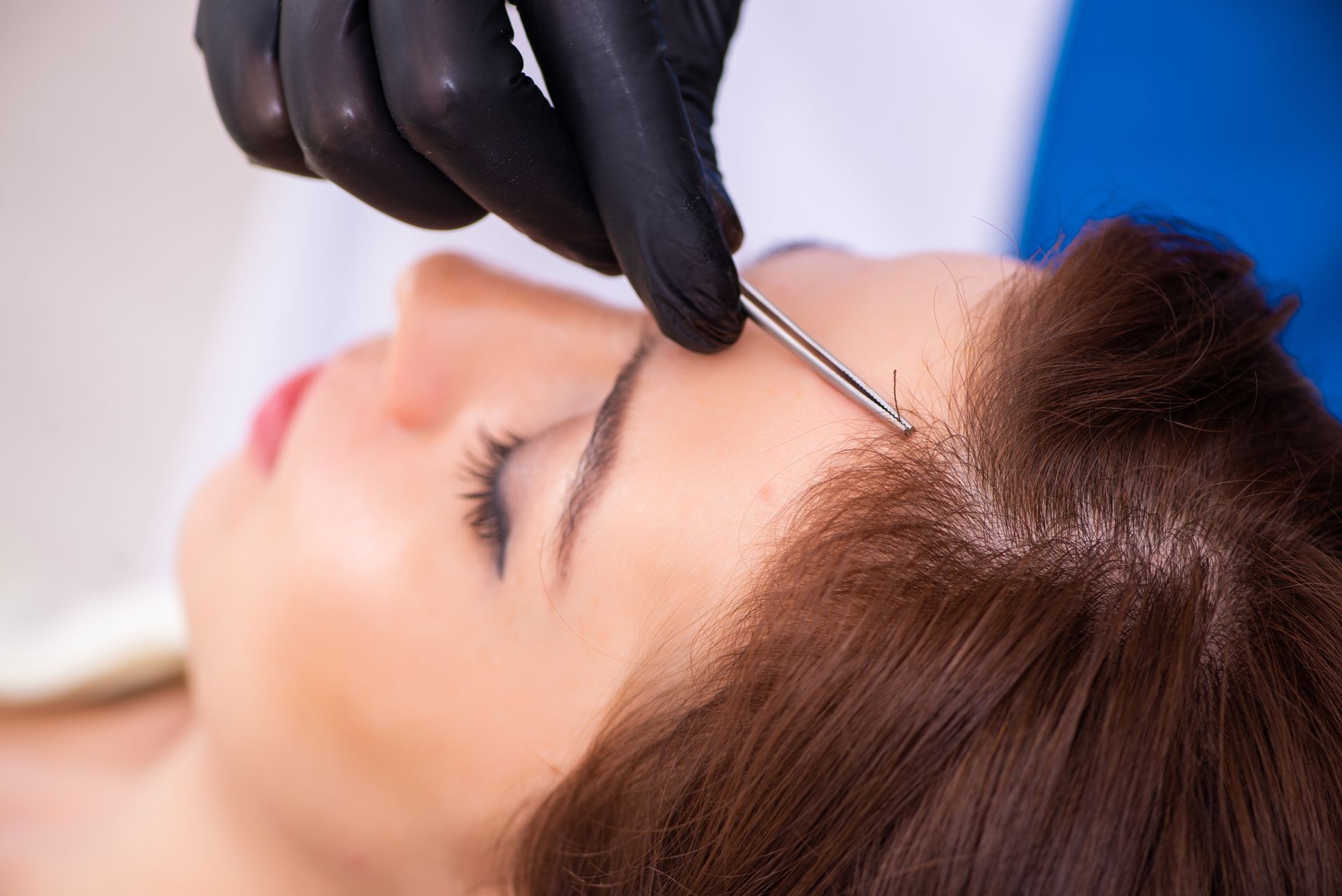
Woman consulting with a hair restoration specialist during a hair transplantation procedure.
7 August 2026
Explore women's hair replacement options serving Troy, MI. Drs. Berry, Luther & Aronovitz offer surgical & non-surgical solutions. Call today.
A medical professional explaining hair follicles, tissue layers, and dermatological conditions.
27 July 2026
Learn the difference between hair replacement and hair transplant. Serving Troy, MI, Drs. Berry, Luther & Aronovitz offer free consultations. Call today.
A man is being examined by a specialist for a hair restoration procedure.
28 May 2026
Considering hair restoration in Troy, MI? Learn the step-by-step process from consultation to results. Call Drs. Berry, Luther & Aronovitz at (586) 612-0757.
A man looking at the mirror at Drs. Berry, Luther & Aronovitz for hair restoration in Troy, MI
17 January 2025
Explore expert hair restoration in Troy, MI, with Drs. Berry, Luther & Aronovitz, and achieve thicker, fuller hair. Click here to know more about the process.
Two medical professionals performing hair transplant surgery on a patient, under bright lights.
24 September 2024
The Ultimate Guide to Hair Transplant Surgery Welcome to our ultimate guide to hair transplant surgery. As doctors who have seen the transformative power of hair restoration, we're excited to share everything you need to know about this life-changing procedure. Whether you're just starting to notice thinning hair or you've been struggling with hair loss for years, this guide is designed to help you make an informed decision about your hair restoration options. Understanding Hair Loss Hair loss is a common issue that affects millions of men and women around the world. It can be caused by a variety of factors, including genetics, hormonal changes, medical conditions, and lifestyle choices. Understanding the cause of your hair loss is the first step toward finding the right treatment. Hair transplant surgery is a minimally invasive procedure that involves moving hair follicles from one part of the body (usually the back or sides of the scalp) to the thinning or balding areas. This helps restore a fuller, more natural-looking hairline. What is Hair Transplant Surgery? Hair transplant surgery is a minimally invasive procedure that involves moving hair follicles from one part of the body (usually the back or sides of the scalp) to the thinning or balding areas. This helps restore a fuller, more natural-looking hairline. Types of Hair Transplants There are two main types of hair transplant procedures: Follicular Unit Transplantation (FUT): In this method, a strip of tissue is removed from the donor area and sutured. The tissue is dissected into the individual follicular units and transplanted to the balding area. Follicular Unit Extraction (FUE): This technique involves extracting individual hair follicles directly from the donor area and implanting them into the recipient area. This can be done with a manual machine or the ARTAS robotic system. The Hair Transplant Procedure Here’s a brief overview of what you can expect during a hair transplant procedure: Consultation: Your journey begins with a detailed consultation to assess your hair loss and determine the best treatment plan. We'll discuss your medical history, hair restoration goals, and the most suitable technique for you. Preparation: On the day of the surgery, the donor and recipient areas will be cleaned and numbed with local anesthesia. Extraction and Transplantation: Hair follicles are carefully extracted from the donor area and prepared for transplantation. The follicle units are then implanted into the balding or thinning areas of the scalp. Recovery: After the procedure, you’ll receive detailed aftercare instructions to ensure optimal healing and hair growth. Most patients experience minimal discomfort and can return to their normal activities within a few days. Benefits of Hair Transplant Surgery Choosing hair transplant surgery offers several significant benefits: Permanent Results: Hair transplants provide a long-term solution to hair loss, using your own hair to restore natural growth. Natural Appearance: Advanced techniques ensure that transplanted hair blends seamlessly with your existing hair. Boosted Confidence: Restoring your hair can significantly improve your self-esteem and overall quality of life. Minimally Invasive: Modern hair transplant methods, especially FUE, are minimally invasive and require little downtime. Is Hair Transplant Surgery Right for You? Hair transplant surgery is a suitable option for many people experiencing hair loss, but it may not be right for everyone. Consider these points: Extent of Hair Loss: Ideal candidates have sufficient donor hair and a clear pattern of hair loss. Expectations: Realistic expectations are crucial. While hair transplants can significantly improve your appearance, they might not restore your hair to its original density. Steps to Take If You’re Considering a Hair Transplant If you’re thinking about getting a hair transplant follow these steps to ensure the best possible outcome: Do Your research: Learn about different hair transplant techniques and their benefits. Consult with a specialist: Schedule a consultation with an experienced hair transplant surgeon to discuss your options. Prepare for the procedure: Follow all preoperative instructions provided by your doctor to ensure a smooth surgery and recovery. Conclusion Hair transplant surgery can be a transformative experience, offering a permanent solution to hair loss and helping you regain your confidence. At Drs. Berry, Luther & Aronovitz, we’re committed to providing personalized care and exceptional results. If you’re ready to take the next step, schedule a consultation with us today to explore how we can help you achieve the look you’ve always wanted.